Why Your Garage Floor Coating is Peeling (And How to Prevent It)
It’s frustrating to invest in a “garage floor coating,” only to see peeling, flaking, or bubbling appear within months. Whether you used epoxy or some other product, you might be left wondering: “Why does this keep happening?” In East Texas – with its high humidity and temperature swings – improper prep or subpar materials can lead to quick failure. Let’s explore the common reasons your garage floor coating may peel, then show how polyaspartic can help you avoid these pitfalls.
1. Problem: Insufficient Surface Preparation before Installing a Garage Floor Coating
- Scenario: Someone applied epoxy over a dirty or oily slab, or used only a quick acid-etch instead of mechanical grinding.
- Result: The coating never fully adhered, so it begins peeling at the edges or around car tires.
Solution:
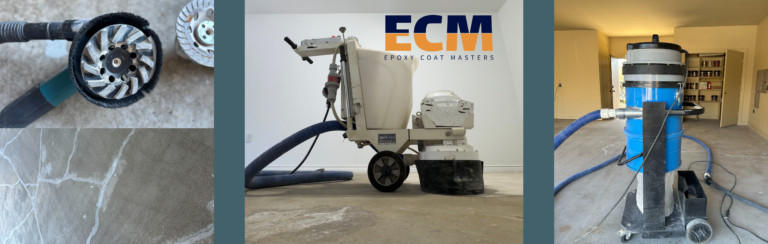
- Always mechanically profile the concrete (diamond grinding or shot blasting).
- Repair cracks or level out spalling.
- Remove any old paint, adhesive residue, or failing epoxy first.
Pro Tip: Hiring professionals like Epoxy Coat Masters ensures thorough prep. Without it, even the best epoxy or polyaspartic will peel eventually.
2. Problem: Moisture or Vapor Issues
- Scenario: East Texas humidity or ground moisture wicking up through the slab.
- Result: Trapped moisture under epoxy or a lesser coating can cause bubbling, chipping, or full-blown delamination of your garage floor coating over time.
Solution:
- Test for moisture by taping plastic sheets to the concrete (a humidity or calcium chloride test).
- If moisture is found, add a vapor barrier or use coatings formulated to handle mild moisture vapor.
Pro Tip: Polyaspartic tends to be more tolerant of slight moisture than epoxy, but thorough dryness is still ideal.
3. Problem: UV Exposure Degradation
- Scenario: A garage door frequently left open leads to sunlight hitting epoxy, which can break down resin bonds.
- Result: Peeling, yellowing, and chalky texture near the threshold or sun-exposed areas.
Solution:
- Use UV-stable coatings like polyaspartic or at least an epoxy topcoat designed for outdoor UV exposure.
- Keep direct sun off the floor if possible—but realistically, that’s tough in bright East Texas settings.
4. Problem: Cheaper or Old Epoxy Product
- Scenario: A bargain-basement epoxy kit was used, or the product sat on the shelf past its prime.
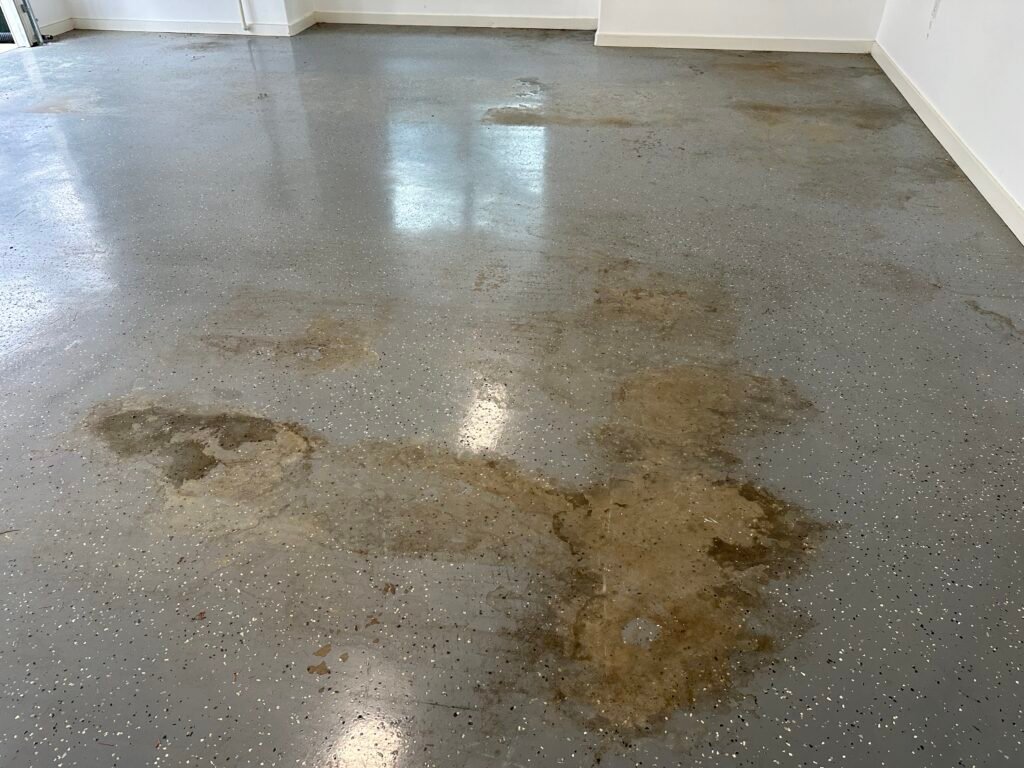
- Result: Weak bonding agents, inconsistent cure, prone to early peeling or discoloration.
Solution:
- Opt for professional-grade or updated formulas with better adherence and UV inhibitors.
- Consider polyaspartic as a modern alternative with stronger, more stable resins.
Pro Tip: If cost is the main concern, weigh the repeated repairs or recoats cheap epoxies often need versus paying more upfront for a quality polyaspartic system.
5. Why Polyaspartic Prevents Peeling of Your Garage Floor Coating
- Rapid Cure & High Bond: Quick set times mean less risk of dust or debris settling on wet coating.
- UV-Stable: Sunlight won’t degrade it, reducing chances of resin breakdown.
- Moisture Tolerance: Though not magical, it’s more forgiving if the slab isn’t perfectly dry, lowering risk of bubbles.
Your garage floor coating peels for many reasons – lack of prep, moisture, sunlight degradation, or cheap epoxy. The solution? Proper surface prep, vigilant moisture checks, and a UV-stable formula. That’s where polyaspartic stands out in East Texas.
If you’re fed up with peeling epoxy, reach out to Epoxy Coat Masters. We’ll diagnose your floor’s underlying issues, remove failing coatings, and install a polyaspartic system built to last – free from the peeling frustrations of the past.