Can You Put a New Garage Floor Coating Over Old Epoxy? | ECM
If your garage floor is peeling, bubbling, yellowing, or lifting under the tires, you may wonder whether a fresh coating can simply be applied over it. In most cases, a failing layer needs to be removed before a new system is installed. Our garage floor coating troubleshooting guide shows several common types of coating failure and examples of floors we have addressed for East Texas homeowners.
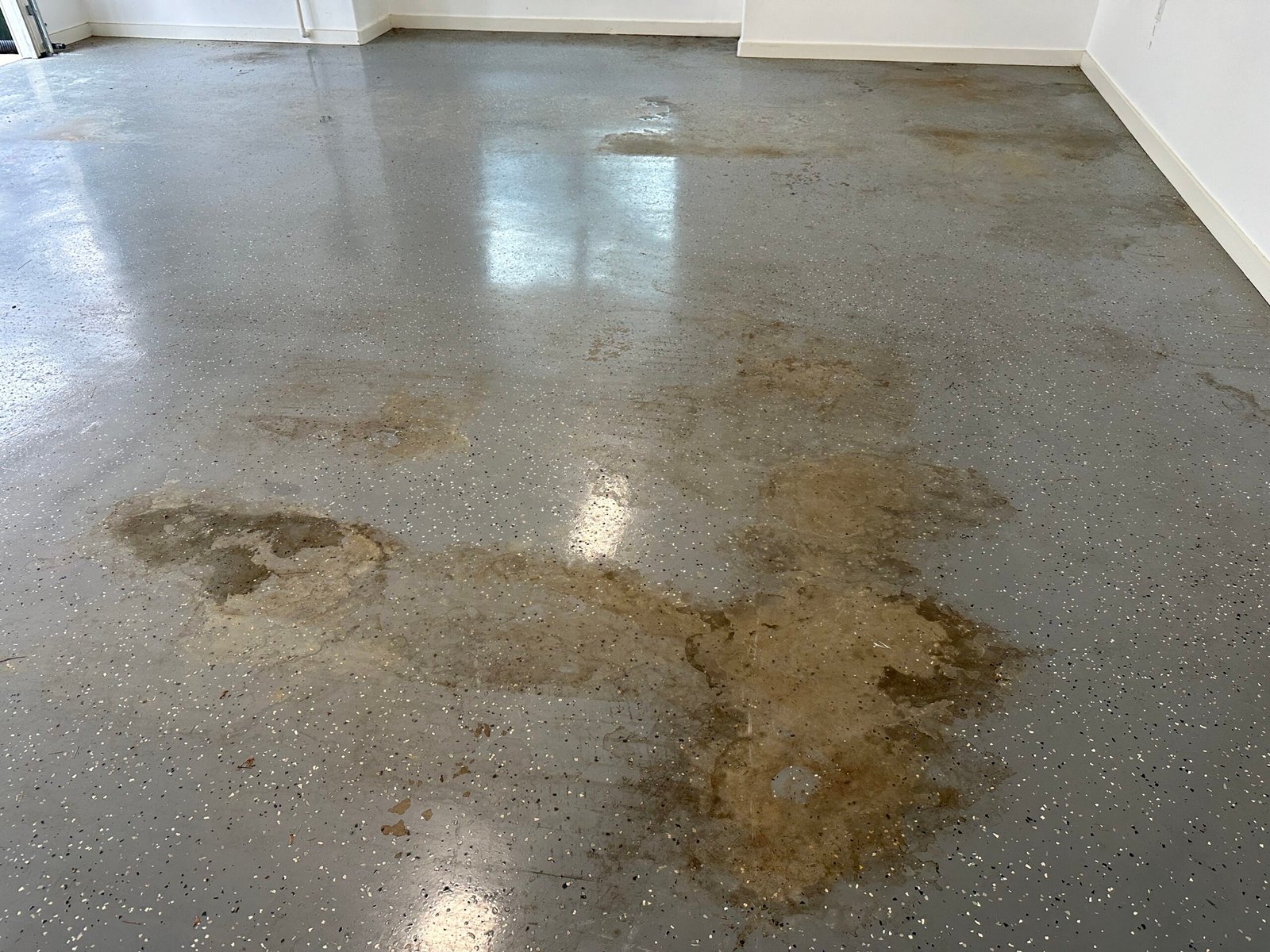
The condition of the existing coating determines what comes next. A floor that still looks reasonably good may have a small area of wear near the garage entrance. Another floor may release in sheets, feel soft beneath parked vehicles, or have bubbles across the surface. Looking closely at where the problem appears and how widespread it is helps us plan the right preparation for a new garage floor coating.
Why Applying a New Coating Over a Failing One Creates Problems
Every layer in a floor system depends on the surface below it. If the old coating has lost its bond with the concrete, anything applied over that coating rests on the same unstable layer. The new material may look smooth at first, yet it can lift along with the coating underneath.
This is why simply rolling another product across peeling epoxy rarely produces a dependable result. Loose material, surface contamination, worn edges, and poorly bonded sections remain underneath. Strong adhesion requires a clean, properly profiled concrete surface.
A professional evaluation also helps prevent unnecessary work. The visible damage may be limited to one section, or the coating may be releasing throughout the garage. We inspect the floor and existing layers before deciding how the surface should be prepared.
What Different Signs of Failure Can Tell You
The way a garage floor coating fails can offer useful clues. An on-site look provides the additional information needed to evaluate the floor.
Peeling Along the Edges or Garage Door
Peeling often begins at the threshold, around control joints, or near the perimeter. These areas may have received limited preparation during the original installation. Sunlight, vehicle traffic, and water carried in from the driveway can also expose weaknesses near the garage entrance.
Once an edge begins lifting, dirt and debris can work beneath the coating. The loose area may continue spreading as vehicles and foot traffic cross it.
Coating Stuck to the Tires
Hot-tire pickup leaves bare patches where warm tires soften or pull away an incompatible coating. You may see dark tire-shaped marks, tacky spots, or sections of coating attached to the tread. This problem is common with some DIY products and thin coatings made for lighter use.
The affected spots still need to be evaluated as part of the full floor. Covering the tire marks leaves the weak coating underneath the new layer.
Bubbles or Blisters
Bubbles can appear as isolated raised spots or across larger sections of the garage. Application conditions, contaminants, vapor movement through the slab, and a weak bond can all contribute to blistering. Several conditions can produce a similar appearance.
An in-person inspection lets us look at the coating, exposed concrete, placement of the bubbles, and surrounding conditions. That information guides the preparation plan and product selection.
Yellowing, Fading, or a Chalky Surface
Discoloration is especially noticeable near an open garage door where sunlight reaches the floor. Traditional epoxy can yellow or develop a chalky appearance after repeated UV exposure. A discolored coating may remain bonded, while another floor may show fading along with peeling or wear.
The difference is important. Cosmetic aging and adhesion failure are separate conditions, even when they appear on the same floor. We evaluate the entire surface before recommending the next step.
How a Failing Garage Floor Is Prepared for a New System
Preparation begins with removing the layers that cannot provide a reliable foundation. We use mechanical grinding and dust-controlled vacuum equipment to expose and profile the concrete. This also removes residue and surface contamination that could interfere with the new base coat.
After the old material is removed, the condition of the concrete becomes much easier to see. Cracks, missing spots, and other surface flaws can then be addressed as part of the preparation. The goal is to create a clean, uniform surface that is ready to accept the coating system.
Our typical garage floor installation process includes surface grinding, preparation of damaged areas, a rubberized urethane base coat, a full broadcast of decorative flake, and a UV-stable polyaspartic topcoat. The layers work together to create an even finish designed for vehicle traffic, sunlight near the garage opening, and routine use.
Can Part of the Floor Be Redone?
The answer depends on the extent of the failure and the result you want. A small damaged area may appear simple to address, but matching the color, texture, gloss, and edge of an older coating can be difficult. Localized failure can also be a visible sign of a broader adhesion problem.
We look at how firmly the remaining coating is bonded, whether the problem is spreading, and how a partial redo would look beside the original finish. When failure is widespread, removing the old system and preparing the full floor generally provides a cleaner and more consistent starting point.
What to Do Before Scheduling an Evaluation
You can leave the diagnosis to us. Take a few clear photographs of the peeling, bubbling, tire marks, or discoloration, along with one or two pictures showing the entire garage. Note when you first saw the problem and whether it seems to be spreading. If you know what product was originally applied or who installed it, that information may also be helpful.
Photos give us a useful first look, but some floor conditions are easier to understand in person. We can examine how the old coating is bonded, discuss how you use the garage, and explain the preparation and system options that fit the space.
Start With the Condition of the Floor
A peeling or patchy garage floor can be redone with the right preparation. The process starts with understanding the existing surface and removing material that cannot support a new system. Careful preparation gives each new layer a sound foundation and creates a finished floor with a consistent appearance.
If your old epoxy or garage floor coating is showing signs of failure, reach out to Epoxy Coat Masters. Send us a few photos or schedule a time for us to look at the space. We will talk through what we see, explain your options, and provide a customized quote for your garage.